

What Does 5% Page Coverage Mean for Toner and Ink?
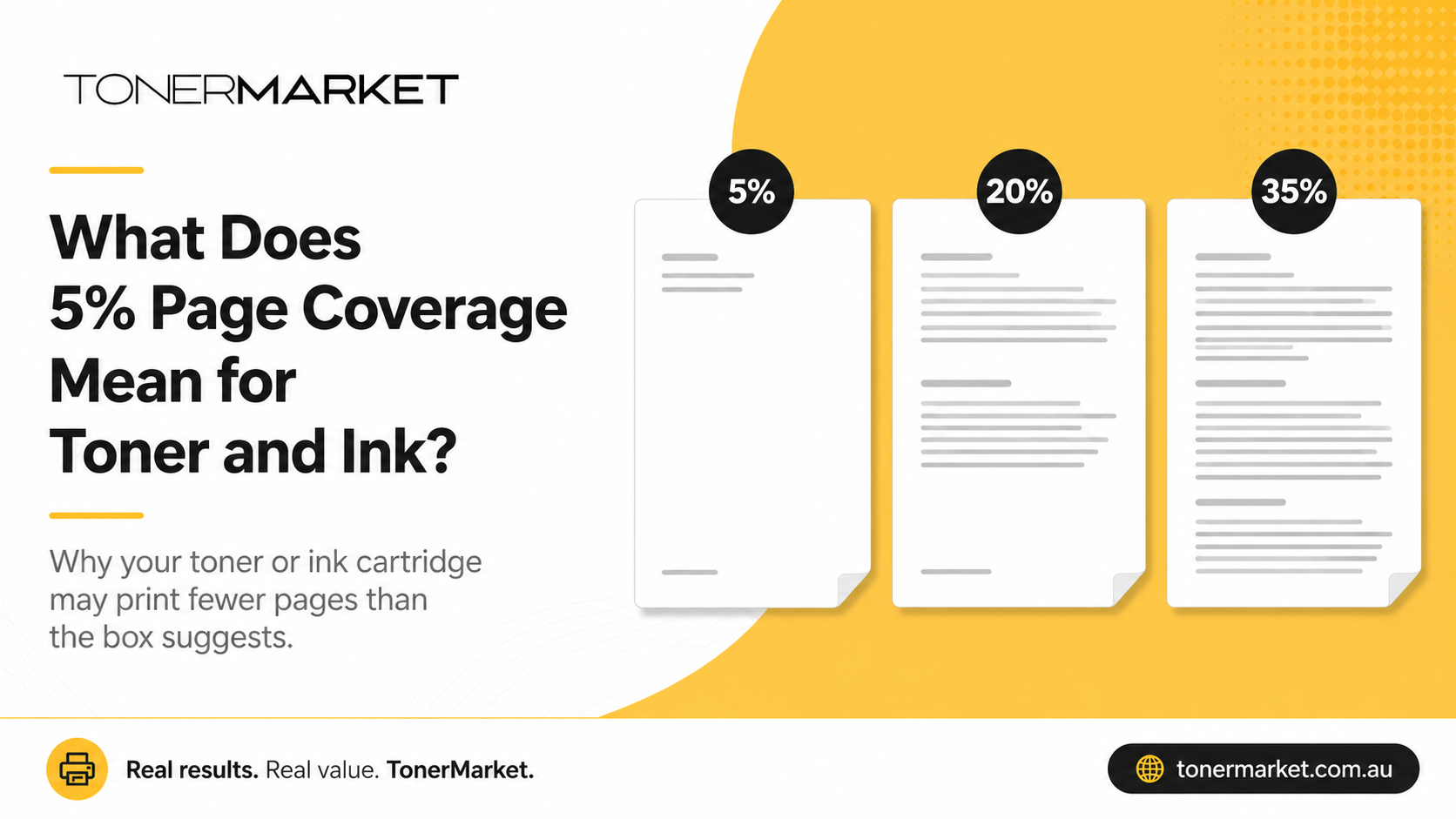
When you buy a toner or ink cartridge, the page yield can look simple. A cartridge might say it prints 3,000 pages, 9,000 pages or even 27,000 pages.
But there is one detail many people miss: that page yield is based on page coverage.
In plain English, 5% page coverage means only about 5% of an A4 page is covered with toner or ink. That is much less printing than most people imagine. A short letter with a few paragraphs might be close. A tax invoice, school worksheet, report, shipping label, spreadsheet or page with a logo can use much more.
This matters because page yield affects the real cost of printing. If your pages use more toner or ink than the standard test page, the cartridge will run out sooner than the number on the box suggests.
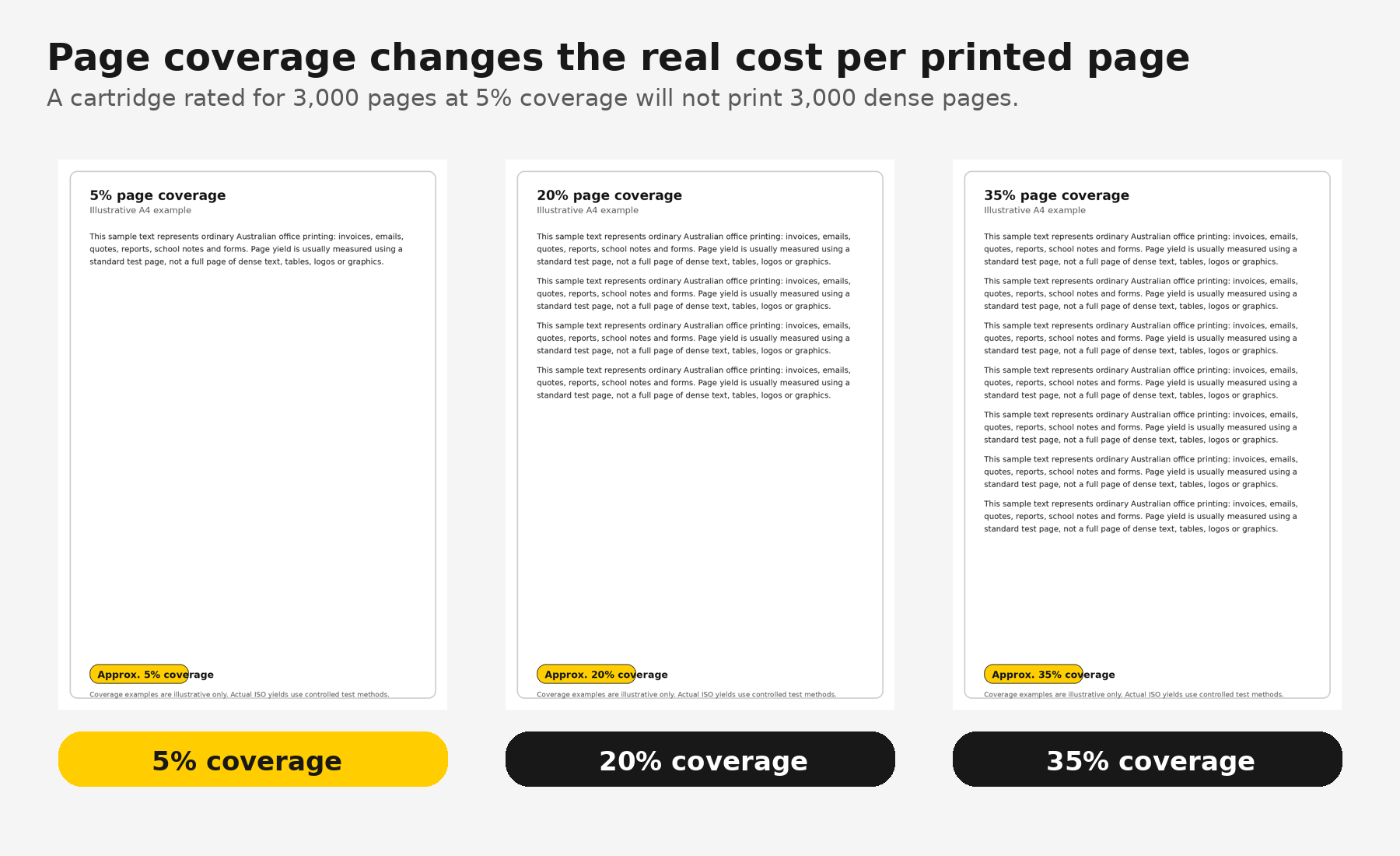
What does 5% page coverage actually look like?
A 5% coverage page is quite light. Think of a basic business letter with a small amount of text and no heavy graphics. It does not look like a full report, a school handout, a flyer, a spreadsheet or a page full of bold headings.
That is why customers sometimes feel a cartridge has not lasted as long as expected. The cartridge may be performing normally, but the real pages being printed may be using two, three or even five times more toner than the standard coverage assumption.
Why printer cartridge yields can feel misleading
Printer manufacturers use standard testing methods so cartridge yields can be compared more fairly. That is useful, but it is not the same as saying every customer will get the exact number of pages shown on the product listing.
Real-world Australian printing is messier. Small businesses print invoices with logos. Medical clinics print forms. Schools print worksheets. Warehouses print packing slips. Home offices print emails, labels and PDFs. These documents often use more than 5% coverage.
For example, TonerMarket currently stocks products such as the HP #76A Black Toner CF276A - 3,000 pages, the HP #26X Black Toner CF226X High Yield 9.0K and the Genuine HP #656X Black Toner CF460X - 27,000 pages. Those page numbers are useful for comparison, but your actual yield depends on what you print.
How much difference does coverage make?
The maths is simple. If a toner cartridge is rated at 3,000 pages at 5% coverage, heavier pages will use toner faster.
| Approximate page coverage | What it might look like | Likely impact on cartridge life |
|---|---|---|
| 5% | Short letter, light text, mostly white space | Closest to the stated page yield |
| 10% | Longer letter or simple document with headings | Roughly half the stated yield |
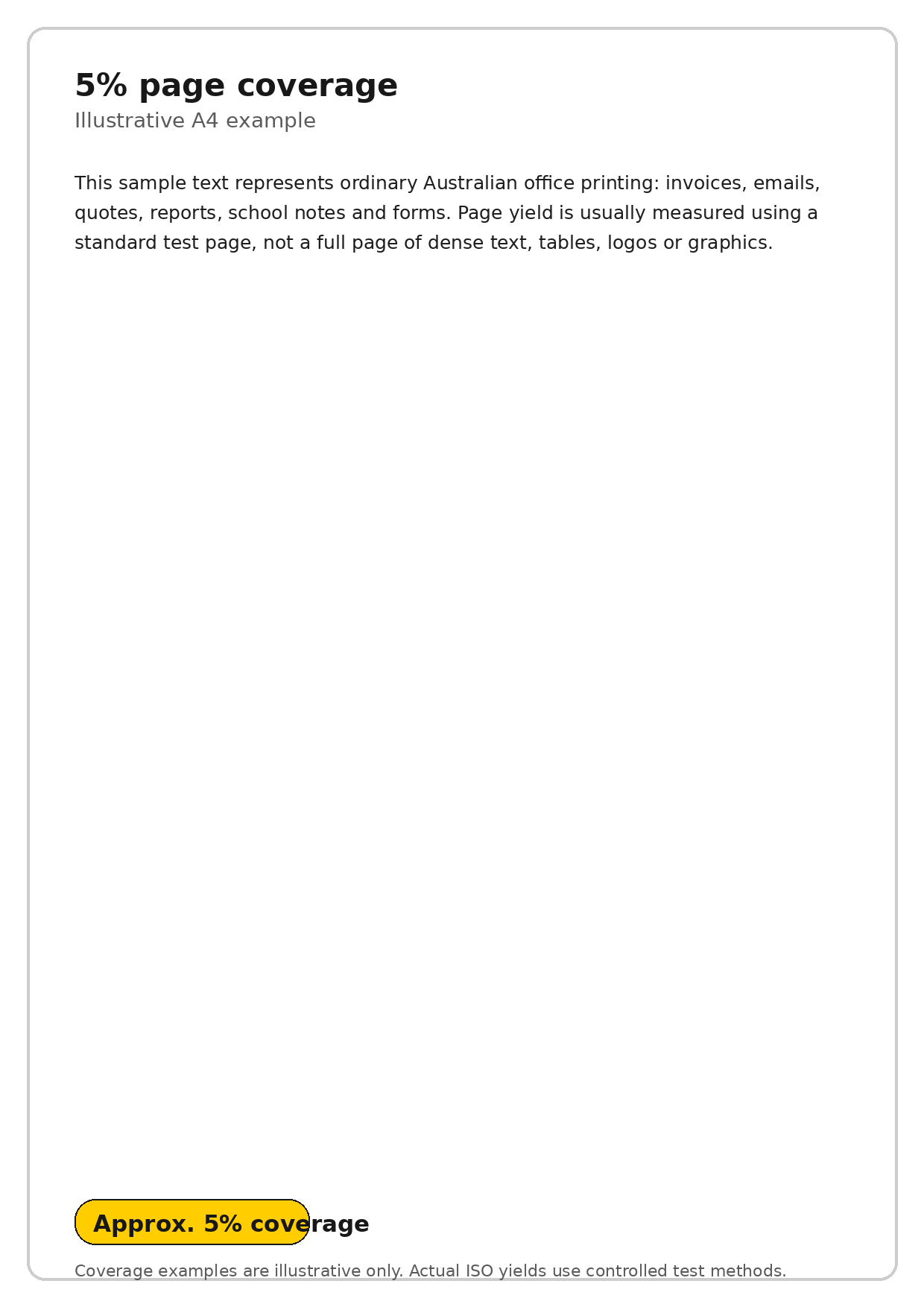
| 20% | Reports, invoices, forms, tables or heavier text | May produce about a quarter of the stated yield |
| 35%+ | Graphics, large headings, dense tables or marketing pages | Can use toner very quickly |
This is only a practical guide, not a lab test. But it explains why two people can buy the same cartridge and get very different results.
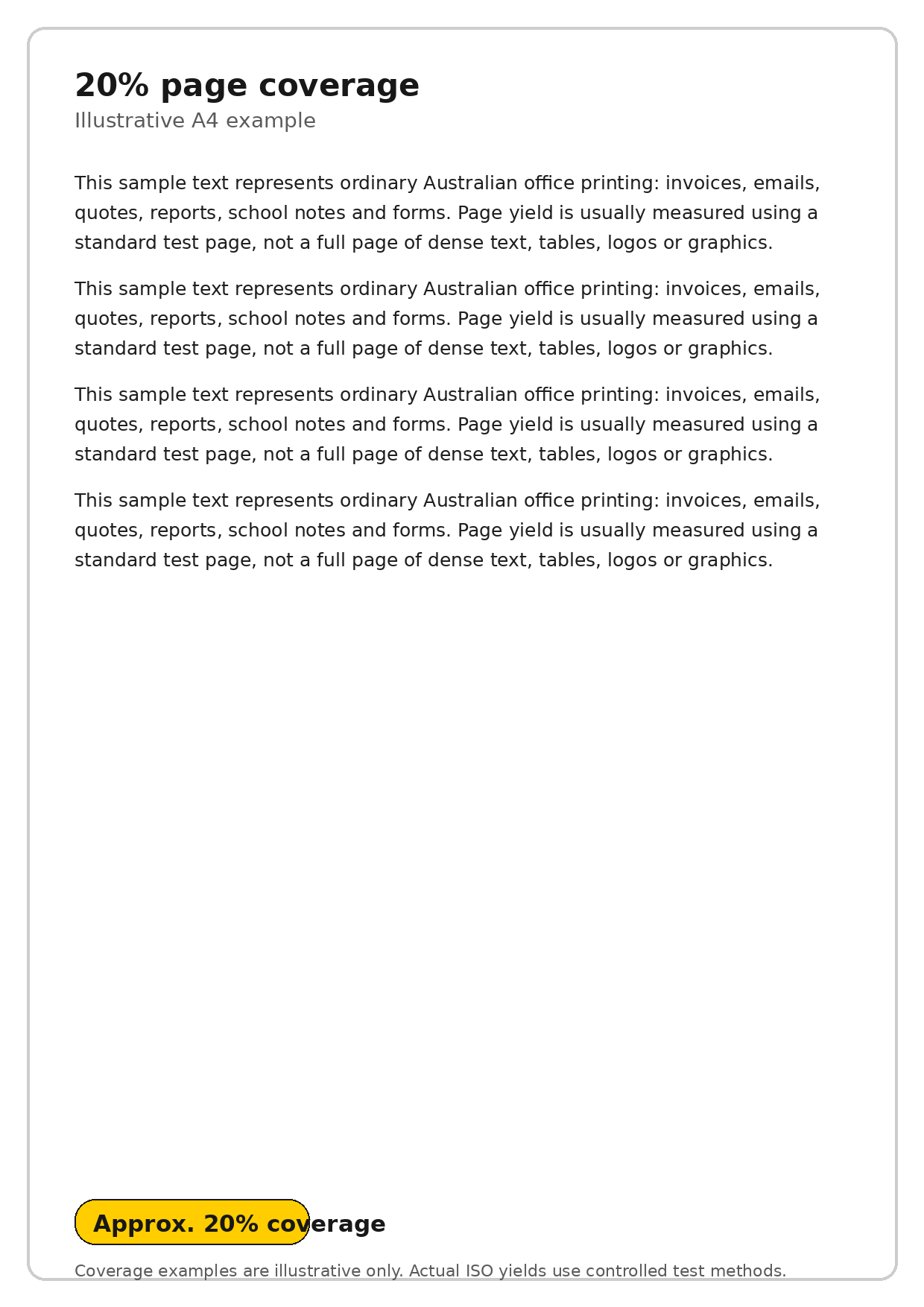
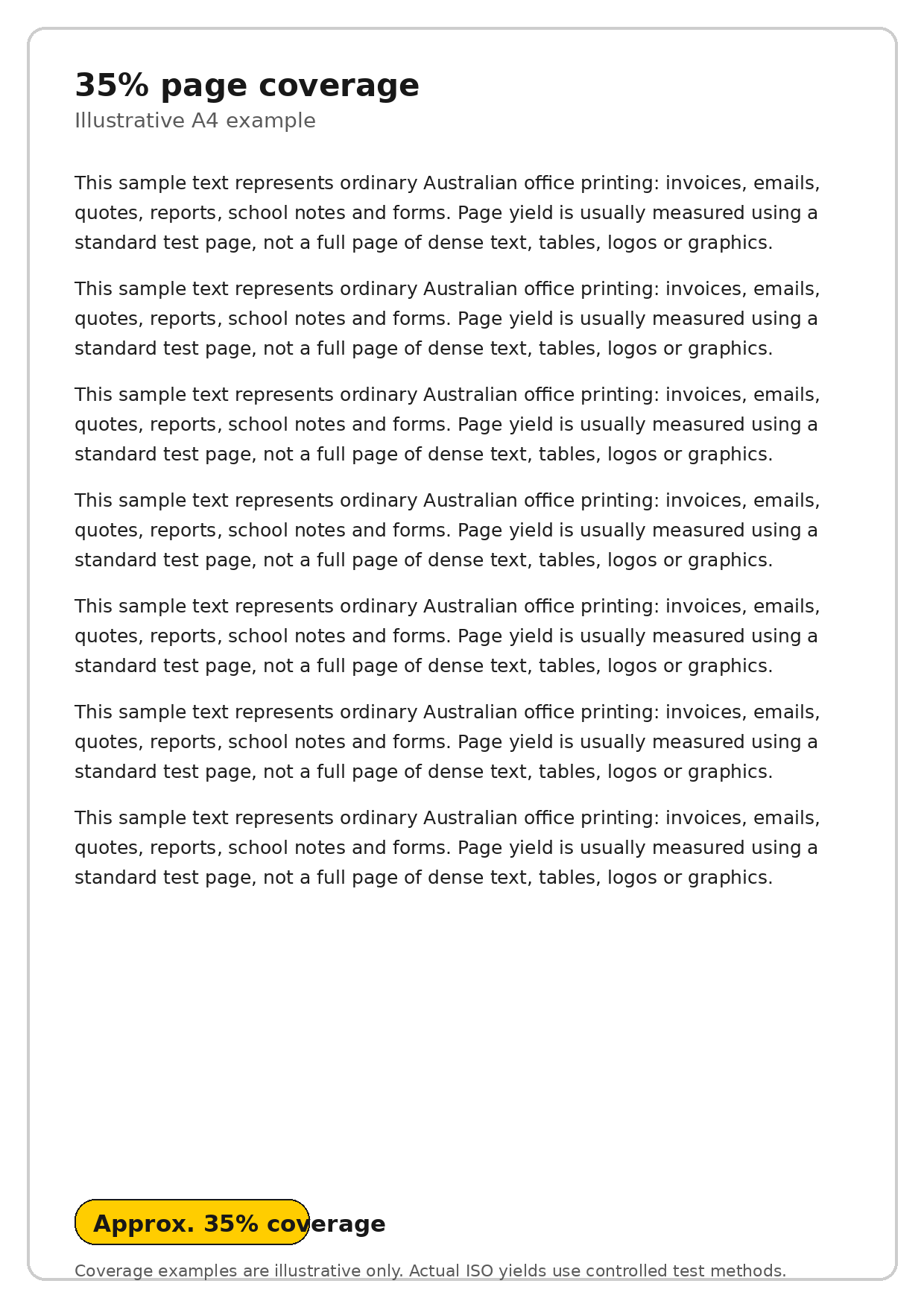
A 35% coverage page is much closer to many real business documents.
Black-and-white printing vs colour printing
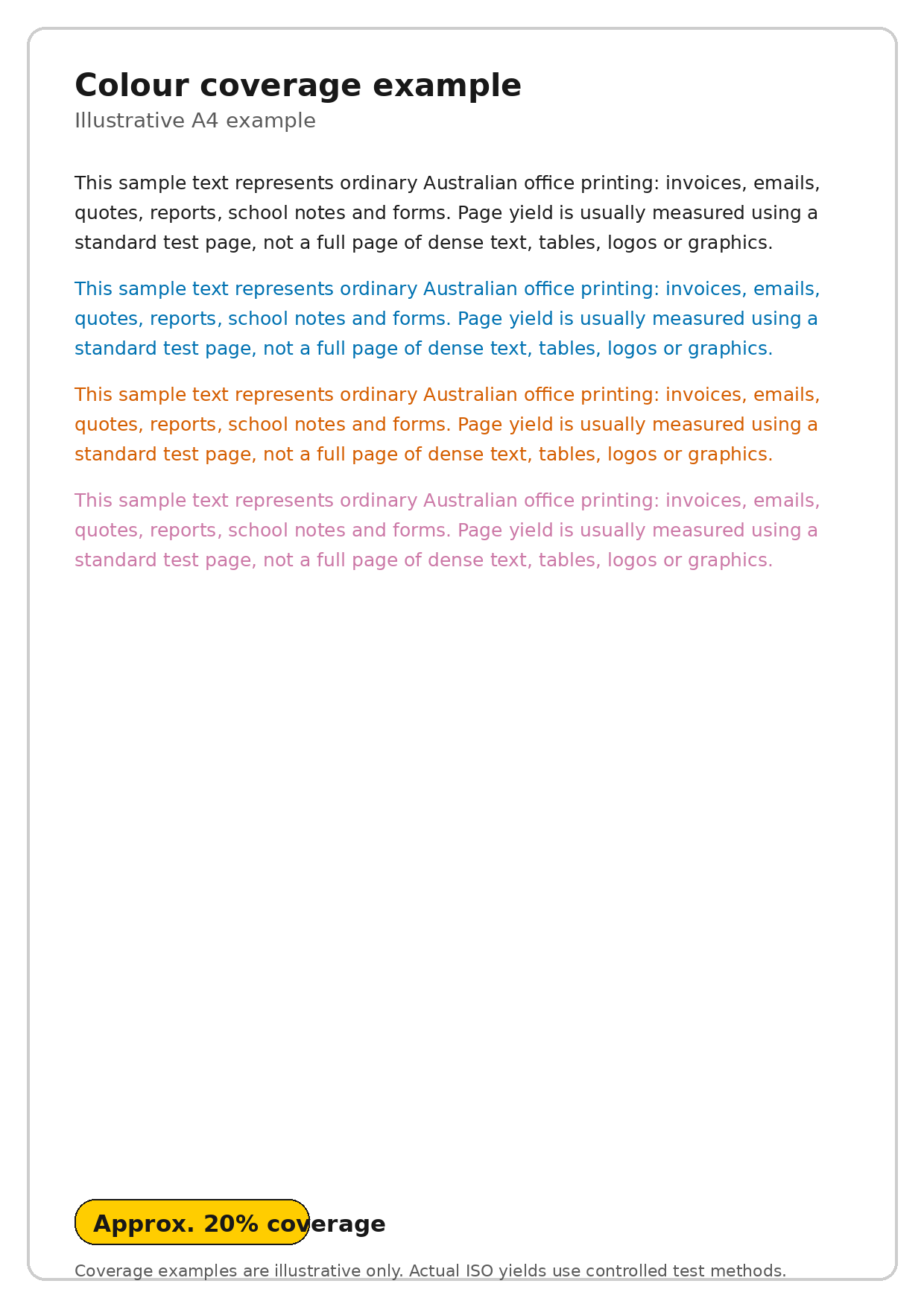
Black toner yield is often discussed around 5% page coverage. Colour printing is different because a colour page may use cyan, magenta, yellow and black together.
A colour product can have separate yields for each cartridge. If a page has photos, coloured logos, charts or blocks of colour, it can drain one colour faster than the others. That is why the cyan, magenta or yellow cartridge may run out before black, even if you do not think you print many “full colour” pages.
For example, TonerMarket stocks colour options such as the HP Genuine #206X Black and Colour High Yield Value Pack, the Brother ink and toner range, and Epson ink cartridges. If you regularly print logos, presentations or colour worksheets, choosing the right cartridge yield matters.
Ink cartridges can be affected too
Page coverage is not only a toner issue. Ink cartridges are also affected by how much you print on each page.
A black ink cartridge used for simple text will usually last longer than one used for dense forms, school projects or pages with heavy blocks of colour. TonerMarket stocks ink products such as the Genuine HP #950XL Black Ink CN045AA, Genuine Epson 812XL Black Ink and Brother LC3319XL high yield ink value packs.
If you use an inkjet printer for school work, forms, photos or graphics, you should expect real-life yield to vary.
Why high yield cartridges can be better value
If you print regularly, high yield cartridges are often worth considering. They usually cost more upfront but can lower the cost per page.
For example, a standard cartridge may be fine for occasional home printing. But for a small business, clinic, office or warehouse, a high yield toner can reduce how often you replace cartridges and may reduce the overall cost of printing.
That is why products like the HP #26X high yield toner range or larger business cartridges such as the HP #656X Black Toner CF460X can make sense for heavier users.
You can also read our related guide: Why Choose High-Yield Toner Cartridges?
How to get more realistic value from your cartridge
You cannot always control what needs to be printed, but you can reduce waste.
- Use draft mode for internal notes and rough copies.
- Avoid printing full-page images unless you really need them.
- Print in black and white when colour is not necessary.
- Check print preview before printing long web pages or PDFs.
- Choose high yield cartridges if you print often.
- Match the cartridge to your real usage, not just the cheapest upfront price.
The takeaway
5% page coverage is a useful industry benchmark, but it does not represent every real-world print job.
If you mostly print short letters and light text, you may get close to the listed yield. If you print invoices, reports, labels, tables, school work, colour documents or graphics, you should expect fewer pages.
The right cartridge is not always the cheapest cartridge. The better question is: what gives you the best value for the way you actually print?
Browse TonerMarket’s toner cartridges, ink cartridges, high yield cartridges or contact us if you want help choosing the right cartridge for your printer.